The Fleurdelisé: Unveiling the History and Symbolism of the Drapeau du Québec
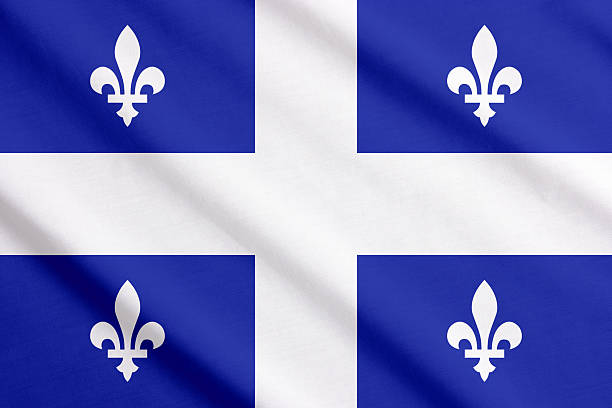
The drapeau du Québec, affectionately known as the Fleurdelisé, is more than just a flag; it’s a potent symbol of Quebec’s identity, history, and aspirations. This striking blue and white banner, featuring four fleurs-de-lis, has a rich and fascinating backstory that reflects the province’s unique cultural heritage. Understanding the drapeau du Québec requires delving into the historical context of its adoption and the deeper meaning behind its design. From its official adoption in 1948 to its continued significance today, the Fleurdelisé remains a powerful emblem for Quebecers worldwide. We will explore the historical origins, the symbolic meaning, and the cultural impact of the drapeau du Québec.
Historical Context: From Carillon to Official Flag
The story of the drapeau du Québec begins long before its official adoption. Its roots can be traced back to the Carillon flag, which was used in New France (the French colony that encompassed much of present-day Canada and the United States) during the 17th and 18th centuries. The Carillon flag, featuring a white cross on a blue field with fleurs-de-lis in each quadrant, is considered a precursor to the modern Fleurdelisé. However, the exact design and usage of the Carillon flag remain a subject of historical debate.
Following the British conquest of New France in 1760, the use of French symbols gradually diminished. The Union Jack became the dominant flag in the region. However, the desire for a distinct Quebecois identity persisted. Throughout the 19th and early 20th centuries, various flags and symbols were used informally to represent Quebec, but none achieved widespread official recognition.
The push for an official Quebec flag gained momentum in the mid-20th century. In the aftermath of World War II, a growing sense of Quebec nationalism fueled the desire for a symbol that would truly represent the province. On January 21, 1948, the Quebec government, under Premier Maurice Duplessis, officially adopted the drapeau du Québec, replacing the Union Jack as the province’s official flag. This decision marked a significant moment in Quebec’s history, solidifying its cultural and political identity.
The Symbolism of the Fleurdelisé
The design of the drapeau du Québec is imbued with symbolism, each element representing a key aspect of Quebec’s history and heritage. The blue field is believed to symbolize the Virgin Mary, who is the patron saint of Canada. This connection reflects the strong Catholic faith that has historically played a significant role in Quebec society.
The white cross, another prominent feature of the flag, represents the Christian heritage of Quebec. It is a symbol of faith, purity, and peace. The cross also evokes the historical connection to France, as the white cross was a common symbol in French flags and banners throughout history.
The four fleurs-de-lis, the most recognizable element of the drapeau du Québec, are a stylized representation of the lily flower. The fleur-de-lis has been a symbol of French royalty for centuries, and its inclusion on the flag signifies Quebec’s French heritage and its historical ties to France. The number four is also significant, representing the four founding peoples of Quebec: French, English, Scottish, and Irish.
The overall design of the drapeau du Québec is intended to convey a sense of pride, tradition, and cultural identity. It is a visual representation of Quebec’s unique place in Canada and the world.
The Drapeau du Québec in Modern Society
Today, the drapeau du Québec is a ubiquitous symbol throughout the province. It flies proudly from government buildings, schools, and private residences. It is displayed at sporting events, cultural festivals, and political rallies. The flag serves as a constant reminder of Quebec’s distinct identity and its commitment to preserving its language, culture, and heritage.
The drapeau du Québec is also a symbol of unity and solidarity among Quebecers. It transcends political and social divides, bringing people together under a common banner. Whether one is a staunch nationalist or a federalist, the Fleurdelisé is a symbol that resonates with most Quebecers.
The flag has also become a powerful symbol for Quebecers living outside the province. It serves as a connection to their homeland and a reminder of their cultural roots. The drapeau du Québec can be seen at Quebecois cultural events around the world, from New England to Europe.
Controversies and Interpretations
While the drapeau du Québec is widely embraced, it has also been the subject of some controversy and debate. Some argue that the flag’s religious symbolism is no longer representative of Quebec’s increasingly secular society. Others criticize the flag’s exclusion of Indigenous peoples and other minority groups.
Despite these criticisms, the drapeau du Québec remains a powerful and enduring symbol for most Quebecers. It is a testament to the province’s rich history, its vibrant culture, and its unwavering commitment to preserving its unique identity. The drapeau du Québec represents not just the past, but also the future aspirations of Quebec.
The interpretation of the drapeau du Québec can vary depending on individual perspectives and beliefs. For some, it represents a strong sense of Quebec nationalism and a desire for greater autonomy. For others, it symbolizes the province’s cultural distinctiveness within Canada. Still others view it as a symbol of unity and solidarity among Quebecers, regardless of their political affiliations.
Conclusion: The Enduring Legacy of the Fleurdelisé
The drapeau du Québec, the Fleurdelisé, is far more than just a piece of cloth. It is a potent symbol of Quebec’s history, culture, and identity. From its historical roots in the Carillon flag to its official adoption in 1948, the Fleurdelisé has played a significant role in shaping Quebec’s national consciousness. Its design, with its blue field, white cross, and four fleurs-de-lis, is rich in symbolism, representing Quebec’s French heritage, its Christian faith, and its commitment to preserving its unique identity.
While the drapeau du Québec has been the subject of some controversy and debate, it remains a widely embraced symbol throughout the province. It flies proudly from government buildings, schools, and private residences, serving as a constant reminder of Quebec’s distinct identity and its commitment to preserving its language, culture, and heritage. The drapeau du Québec is a symbol of unity and solidarity among Quebecers, transcending political and social divides and bringing people together under a common banner.
As Quebec continues to evolve and adapt to the challenges of the 21st century, the drapeau du Québec will undoubtedly remain a powerful and enduring symbol of its unique identity and its unwavering commitment to preserving its cultural heritage. The drapeau du Québec is a symbol that will continue to inspire and unite Quebecers for generations to come.
[See also: History of Quebec]
[See also: Quebec Nationalism]
[See also: Symbols of Canada]
