Decoding the Tarot: A Comprehensive Guide to the “Carte de Tarot”
The “carte de tarot,” or Tarot card, has captivated minds for centuries, serving as a tool for divination, self-reflection, and psychological exploration. More than just a deck of cards, the Tarot is a rich tapestry of symbolism, history, and esoteric knowledge. This comprehensive guide will delve into the intricacies of the carte de tarot, exploring its origins, structure, interpretations, and practical applications. Whether you’re a curious beginner or an experienced reader, understanding the nuances of the carte de tarot is essential for unlocking its full potential.
The History and Origins of the Tarot
The precise origins of the carte de tarot are shrouded in mystery, with various theories vying for acceptance. What we know for sure is that the earliest surviving Tarot decks date back to mid-15th century Italy. These early decks, often referred to as “Tarocchi” or “Trionfi,” were primarily used for playing games, not divination. The Visconti-Sforza deck, commissioned by the Duke of Milan, is one of the most famous examples of these ornate and beautifully crafted cards. It’s important to remember that the initial purpose of the carte de tarot was recreational.
The association of the carte de tarot with occult practices didn’t emerge until the late 18th century. French occultist Antoine Court de Gébelin, in his multi-volume work “Le Monde Primitif,” proposed a connection between the Tarot and ancient Egyptian wisdom. While this theory has been widely debunked by historians, it sparked a wave of interest in the Tarot as a tool for divination and spiritual insight. This marked a significant shift in how the carte de tarot was perceived and utilized.
The Structure of a Tarot Deck
A standard Tarot deck consists of 78 cards, divided into two main sections: the Major Arcana and the Minor Arcana. Each section plays a distinct role in the reading and offers unique insights. Understanding this structure is crucial for interpreting the carte de tarot effectively.
The Major Arcana
The Major Arcana comprises 22 cards, each representing a significant archetypal figure, life lesson, or karmic influence. These cards often depict pivotal moments in one’s life journey and offer guidance on major decisions and transformations. Examples include:
- The Fool: Represents new beginnings, innocence, and taking a leap of faith.
- The Magician: Symbolizes skill, resourcefulness, and the ability to manifest one’s desires.
- The High Priestess: Represents intuition, wisdom, and the subconscious mind.
- The Empress: Symbolizes abundance, nurturing, and creativity.
- The Emperor: Represents authority, structure, and control.
- The Lovers: Symbolizes choice, harmony, and partnerships.
- The Chariot: Represents willpower, determination, and overcoming obstacles.
- Justice: Represents fairness, truth, and accountability.
- The Hermit: Represents introspection, solitude, and seeking inner guidance.
- Wheel of Fortune: Represents cycles, destiny, and change.
- Strength: Represents courage, compassion, and inner power.
- The Hanged Man: Represents sacrifice, surrender, and a shift in perspective.
- Death: Represents transformation, endings, and new beginnings.
- Temperance: Represents balance, moderation, and harmony.
- The Devil: Represents temptation, materialism, and self-imposed limitations.
- The Tower: Represents sudden change, upheaval, and liberation.
- The Star: Represents hope, inspiration, and renewal.
- The Moon: Represents illusion, intuition, and the subconscious.
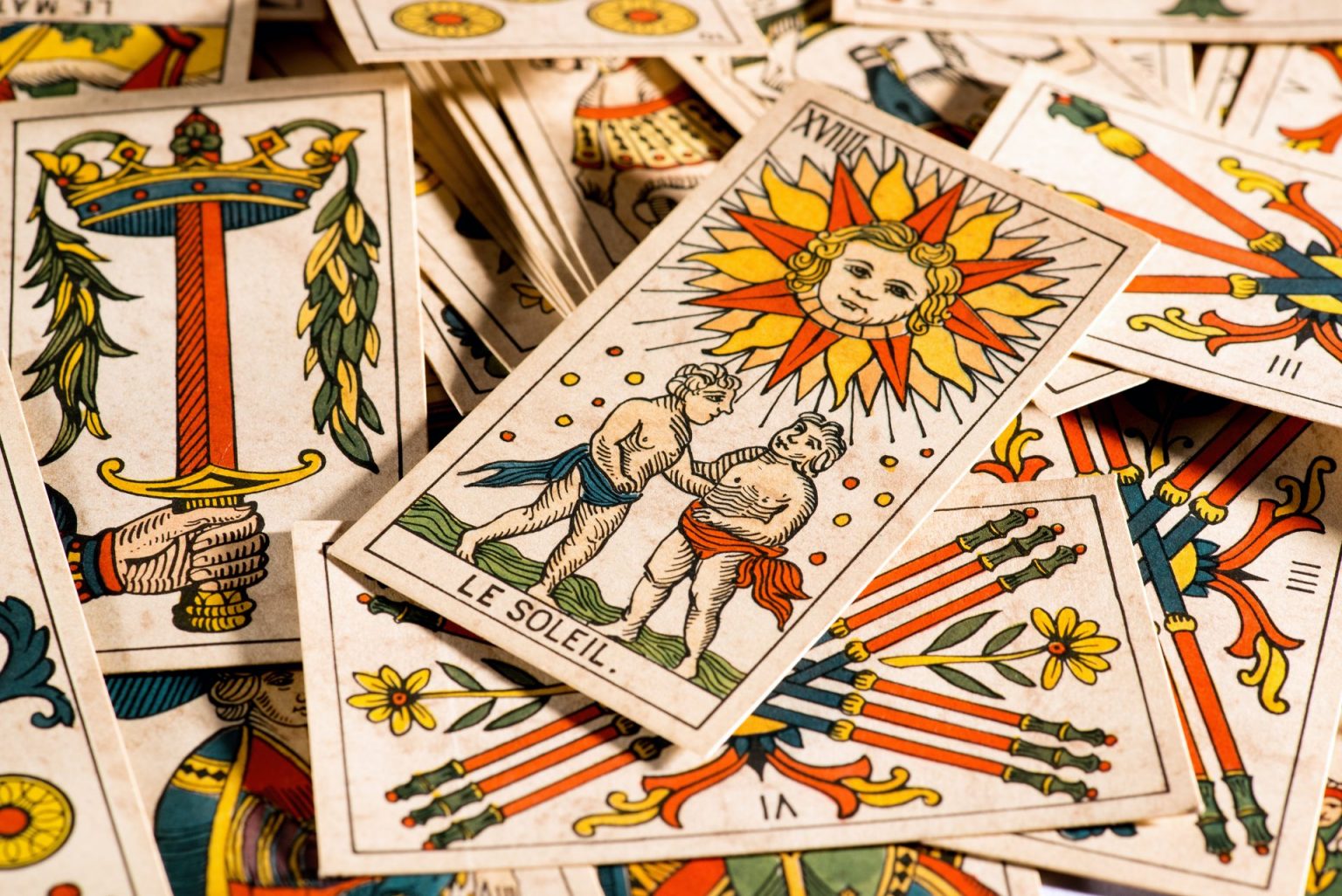
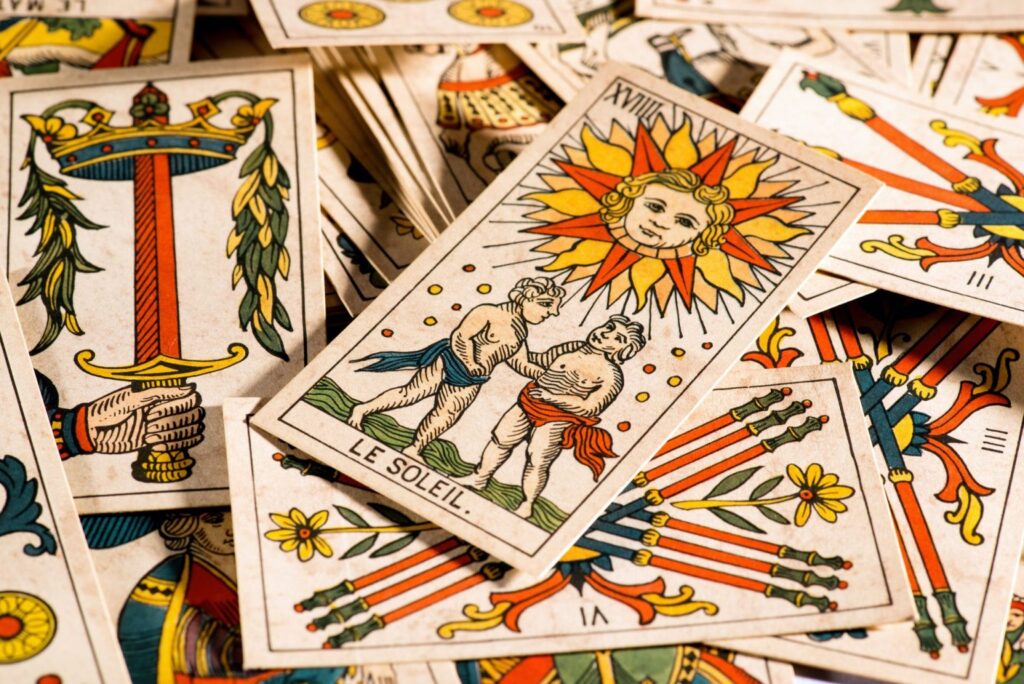
- The Sun: Represents joy, success, and vitality.
- Judgment: Represents awakening, rebirth, and self-evaluation.
- The World: Represents completion, wholeness, and fulfillment.
Each carte de tarot in the Major Arcana carries profound symbolism, and their meanings can vary depending on the deck and the reader’s intuition. Understanding the archetypes represented by these cards provides a framework for interpreting the broader themes in a reading.
The Minor Arcana
The Minor Arcana consists of 56 cards, divided into four suits: Wands, Cups, Swords, and Pentacles (or Coins). These suits represent different aspects of everyday life and offer insights into specific situations and challenges. Each suit also corresponds to a particular element:
- Wands (Fire): Represent action, passion, creativity, and energy.
- Cups (Water): Represent emotions, relationships, intuition, and love.
- Swords (Air): Represent intellect, logic, communication, and conflict.
- Pentacles (Earth): Represent material possessions, finances, security, and practicality.
Within each suit, there are ten numbered cards (Ace through Ten) and four court cards: Page, Knight, Queen, and King. These court cards often represent specific personality types or individuals who may be influencing the situation. The Minor Arcana provides detailed insights into the practical aspects of life and offers guidance on navigating everyday challenges. Learning the nuances of each suit and card is essential for a well-rounded understanding of the carte de tarot.
Interpreting the Carte de Tarot: Techniques and Approaches
Interpreting the carte de tarot is a complex process that requires both knowledge and intuition. There are several techniques and approaches that readers use to gain insights from the cards. Here are a few key considerations:
- Card Meanings: Familiarize yourself with the traditional meanings of each card. However, don’t be afraid to develop your own interpretations based on your personal experiences and intuition.
- Card Combinations: Pay attention to the cards that appear together in a reading. The combination of cards can create a unique narrative and provide deeper insights.
- Spreads: Use different Tarot spreads to address specific questions or areas of life. Common spreads include the Celtic Cross, the Three-Card Spread, and the Relationship Spread.
- Intuition: Trust your intuition when interpreting the cards. Your gut feelings and impressions can often provide valuable insights that go beyond the literal meanings of the cards.
- Context: Consider the context of the reading and the querent’s (the person receiving the reading) situation. The meaning of a card can change depending on the circumstances.
Remember that the carte de tarot is a tool for guidance and self-discovery, not a predictor of the future. The cards can offer insights into potential outcomes and help you make informed decisions, but ultimately, you are responsible for shaping your own destiny. Mastering the art of interpreting the carte de tarot requires practice, patience, and a willingness to explore the depths of your own intuition.
Choosing Your First Tarot Deck
Selecting your first carte de tarot deck is a personal and important decision. There are countless decks available, each with its own unique artwork, symbolism, and energy. Here are a few tips to help you choose the right deck for you:
- Imagery: Choose a deck with imagery that resonates with you. The artwork should be appealing and easy to understand.
- Themes: Consider the themes and style of the deck. Some decks are based on traditional Tarot imagery, while others explore different cultural or spiritual traditions.
- Reviews: Read reviews from other Tarot readers to get an idea of the deck’s quality and accuracy.
- Intuition: Trust your intuition when choosing a deck. Pick a deck that you feel drawn to and that feels right for you.
Some popular Tarot decks for beginners include the Rider-Waite-Smith deck, the Thoth deck, and the Wild Unknown deck. Experiment with different decks until you find one that suits your style and preferences. The carte de tarot you choose will become a trusted companion on your journey of self-discovery.
Ethical Considerations in Tarot Reading
As with any form of divination or guidance, it’s important to approach Tarot reading with ethical considerations in mind. Here are a few guidelines to follow:
- Respect: Treat the querent with respect and empathy. Avoid making judgments or giving unsolicited advice.
- Confidentiality: Maintain the confidentiality of the reading. Do not share the querent’s personal information with anyone else.
- Empowerment: Empower the querent to make their own decisions. Avoid telling them what to do or predicting their future.
- Limitations: Be aware of the limitations of Tarot reading. The cards can offer insights, but they are not a substitute for professional advice.
- Honesty: Be honest and transparent with the querent. If you are unsure about a card’s meaning, admit it.
By adhering to these ethical guidelines, you can ensure that your Tarot readings are conducted with integrity and respect. The carte de tarot should be used as a tool for empowerment and self-discovery, not for manipulation or control.
The Carte de Tarot: A Tool for Self-Discovery
Beyond divination, the carte de tarot can be a powerful tool for self-discovery and personal growth. By reflecting on the symbolism and archetypes of the cards, you can gain insights into your own strengths, weaknesses, and patterns of behavior. The Tarot can help you identify your goals, overcome challenges, and live a more authentic life. [See also: Tarot for Beginners: A Step-by-Step Guide]
Using the carte de tarot for journaling, meditation, and creative expression can deepen your understanding of yourself and the world around you. The Tarot is a mirror that reflects your inner landscape, allowing you to explore your subconscious mind and unlock your full potential. Whether you’re seeking guidance, inspiration, or simply a deeper connection to yourself, the carte de tarot can be a valuable ally on your journey.
In conclusion, the “carte de tarot” is far more than a simple deck of cards. It is a powerful tool for divination, self-reflection, and psychological exploration. By understanding the history, structure, and interpretations of the Tarot, you can unlock its full potential and use it to navigate the complexities of life with greater clarity and insight. The carte de tarot invites you to embark on a journey of self-discovery, empowering you to make informed decisions and live a more fulfilling life. Embrace the wisdom of the carte de tarot and discover the magic within.
